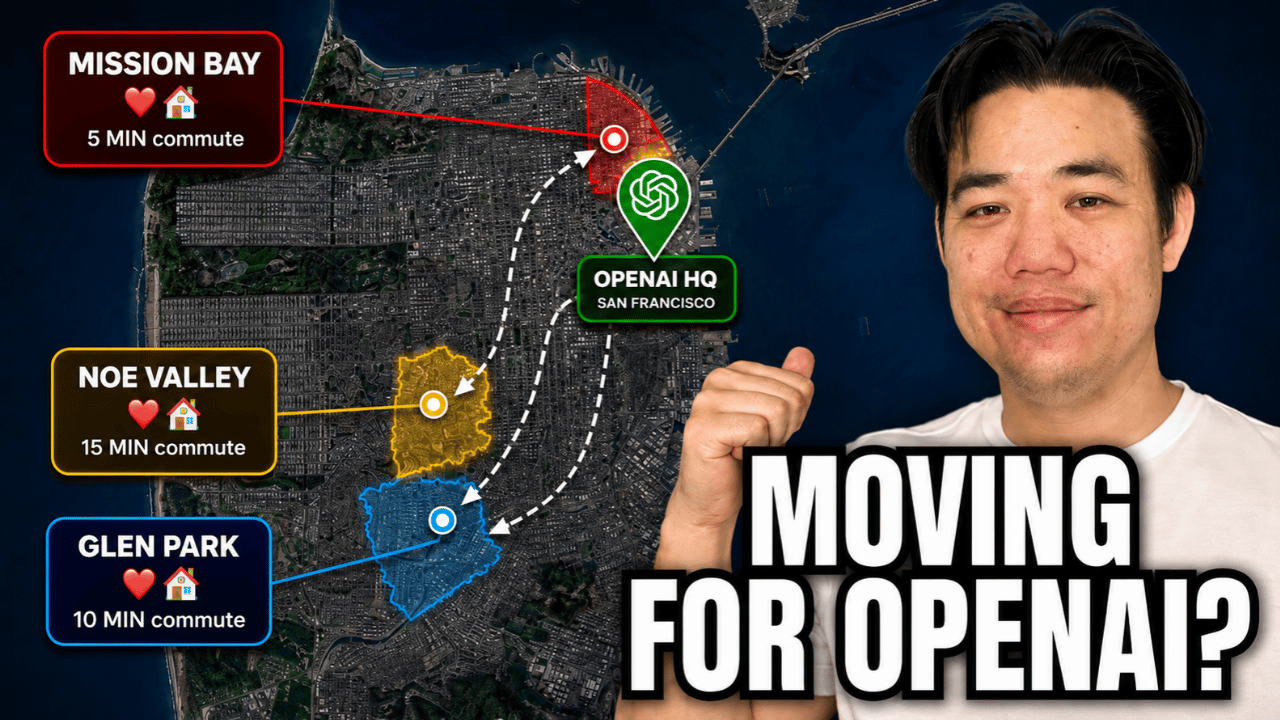
The Best Neighborhood Isn’t Always Closest to Work
Landing a job at OpenAI, Anthropic, or another leading AI company can be an exciting career milestone. But if you're moving to the Bay Area, one of your biggest decisions is where to buy a home.
Many tech professionals initially look for properties near their offices in San Francisco's Mission Bay or South Beach neighborhoods. While these locations offer convenient commutes, they may not provide the space, schools, or long-term value that buyers need as their careers and families grow.
With AI companies attracting talent and investment to the Bay Area, choosing the right neighborhood requires looking beyond proximity to work. Your budget, lifestyle, transportation needs, and five-year plans should all factor into your decision.
In this guide, we'll explore six neighborhoods worth considering in 2026: Mission Bay and South Beach, Noe Valley, Burlingame and Hillsborough, Oakland and Berkeley, western San Francisco, and Glen Park.
1. Mission Bay and South Beach: Best for Walking to Work
If your priority is minimizing your commute, Mission Bay and South Beach are among the most convenient places to live near OpenAI's San Francisco offices.
These neighborhoods offer modern condominium buildings, waterfront access, and an urban lifestyle that allows many residents to get around without a car.
2026 home price ranges:
- Studios: Starting around $450,000
- Two-bedroom condos: Starting around $915,000
- Three-bedroom condos: Starting around $1.7 million
- Luxury penthouses: Reaching $10 million or more
The biggest advantage is convenience. You can potentially walk to work in minutes while enjoying restaurants, entertainment, and the amenities of downtown San Francisco.
However, most buyers here are purchasing a condominium lifestyle rather than a traditional property with land. Homeowners association (HOA) dues can range from approximately $1,000 to more than $3,300 per month, depending on the building and amenities.
Condominium appreciation has also historically been less consistent than in some other property segments.
Best for: Single professionals, couples, and buyers who value convenience, modern buildings, and a short commute.
If you're planning to start a family or want a yard and more living space, consider whether this neighborhood will still suit your needs five years from now.
2. Noe Valley: Best for Long-Term Living and Character Homes
Noe Valley offers a different side of San Francisco. Known for its sunny microclimate, tree-lined streets, Victorian and Edwardian homes, independent bookstores, and farmers market, it attracts professionals and families looking for a neighborhood they can settle into for years.
Unlike Mission Bay, Noe Valley has a stronger emphasis on traditional residential living, with single-family homes and established community amenities.
2026 home price ranges:
- Two-bedroom condos: Approximately $935,000 to $2.8 million
- Single-family homes: Approximately $1.54 million to $7.6 million
Buyers can find everything from fixer-uppers to extensively renovated luxury homes.
One of the neighborhood's biggest attractions is its historical price resilience. According to the market perspective shared in the video, Noe Valley properties have held their value better than many San Francisco condominium-focused submarkets.
That resilience can make the neighborhood attractive to buyers who want both lifestyle benefits and a longer-term ownership strategy.
The trade-off is affordability. Single-family homes can require a substantial budget, especially for properties that have been renovated or expanded.
Best for: Mid-career tech professionals, executives, couples planning for children, and buyers who value neighborhood character and long-term ownership.
3. Burlingame and Hillsborough: Best for Space, Schools, and Privacy
For buyers willing to live outside San Francisco, the Peninsula communities of Burlingame and Hillsborough offer a different combination of benefits.
Burlingame is known for its walkable downtown, restaurants, boutiques, and access to Caltrain. Hillsborough, meanwhile, is associated with larger estates, substantial lots, and greater privacy.
2026 home price ranges:
- Burlingame entry-level homes: Around $1.65 million
- Burlingame move-in-ready family homes: Often above $3 million
- Hillsborough luxury estates: Up to approximately $19.8 million
At the lower end of Burlingame's market, buyers may find a two-bedroom, one-bathroom fixer. Move-in-ready family homes typically require a much larger budget.
The key advantage is space. Compared with a San Francisco condominium, a Peninsula home may offer more square footage, a yard, and access to established public school systems.
Burlingame also provides a relatively convenient commute, with Caltrain trips to San Francisco taking approximately 30 minutes, depending on the service and destination.
Hillsborough appeals to buyers who prioritize privacy and luxury over a walkable commercial district.
Best for: Established tech professionals, executives, families, and buyers who prioritize space, schools, and privacy.
The trade-off is cost. Buyers should be prepared for significantly higher prices when targeting larger homes and premium Peninsula locations.
4. Oakland and Berkeley: Best for Value and Transit Access
For buyers who want more home for their money, Oakland and Berkeley deserve serious consideration.
These East Bay communities offer distinctive neighborhoods, independent restaurants, established residential streets, Craftsman-style homes, and access to parks and outdoor recreation.
Neighborhoods such as Rockridge stand out for their walkable commercial streets, local dining options, and proximity to BART.
2026 home price ranges:
- Oakland homes: Starting around $900,000
- Exceptional homes in Oakland and Berkeley: Up to approximately $5.5 million
Compared with the cost of a San Francisco condominium, a similar budget may provide the opportunity to purchase a detached home with more space and outdoor access.
Transit is another major advantage. A BART trip from Rockridge to the 16th Street Mission area can take approximately 30 minutes, depending on the schedule and connections.
The main consideration is market variability. The video notes that some East Bay values experienced larger pullbacks from the 2022 market peak than certain premium San Francisco neighborhoods.
For buyers, that volatility can create opportunities, but it also makes neighborhood-level research and careful property selection especially important.
Best for: Value-conscious tech professionals, remote or hybrid workers, buyers seeking more square footage, and commuters comfortable using BART.
5. Western San Francisco: Best for Residential Space Within the City
Neighborhoods such as the Inner Sunset, Inner Richmond, and West Portal are often overlooked by people relocating to San Francisco for tech jobs.
However, these areas offer traditional residential streets, single-family homes, local businesses, and access to parks and recreation.
The Inner Richmond is known for the restaurants, bakeries, and markets along Clement Street. The Inner Sunset provides access to Golden Gate Park, including its museums, trails, and outdoor attractions.
2026 home price ranges:
- Single-family homes: Starting around $1.5 million
- Premium properties: Up to approximately $5 million
One potential advantage is the ability to purchase a house with a yard instead of a condominium with substantial monthly HOA dues.
The trade-off is the neighborhood's famously foggy weather and less direct access to Caltrain or BART. Depending on the location, residents may rely on Muni, biking, or rideshare services.
The video estimates that some Muni commutes from these neighborhoods may take approximately 20 to 35 minutes.
Best for: Buyers who want a traditional San Francisco neighborhood, more living space, local businesses, and access to parks without leaving the city.
6. Glen Park: The Hidden Gem for Transit and Value
If there's one neighborhood in this guide worth a closer look, it's Glen Park.
Located near Noe Valley, Glen Park offers a residential atmosphere and convenient access to a BART station within the neighborhood. That transit connection is especially useful for professionals commuting to downtown San Francisco or traveling toward the Peninsula.
For households with different commuting needs, this can be a significant advantage. One person might work near OpenAI's offices, while another commutes toward the South Bay.
2026 home price ranges:
- Single-family homes: Starting around $1.235 million
- Higher-end properties: Up to approximately $5 million
Glen Park's starting price is lower than the entry point for single-family homes in Noe Valley, while its transit access makes it a compelling alternative for buyers who want to remain in San Francisco.
The neighborhood combines residential character with practical transportation options, potentially offering a strong balance between lifestyle and affordability.
As more tech professionals evaluate where to live, neighborhoods that offer both convenient transit and relatively accessible home prices could attract greater attention.
Best for: Tech professionals who want a single-family home, buyers seeking an alternative to Noe Valley, and households commuting to both San Francisco and the South Bay.
How AI Hiring Could Affect San Francisco Real Estate
The growth of OpenAI, Anthropic, and other AI companies is an important factor to watch in the Bay Area housing market.
The video highlights the potential impact of major funding rounds, future public listings, and employee equity compensation. When employees receive substantial liquidity from company shares, some may use that capital toward purchasing homes.
There is historical precedent for technology wealth influencing nearby housing markets. The growth and public listings of companies such as Facebook and Google helped create substantial wealth among employees and investors in the broader Bay Area.
However, the timing and scale of any future effect remain uncertain. A company's public listing does not automatically translate into immediate home purchases, and not every employee will sell shares or buy property.
For homebuyers, the practical takeaway is to monitor hiring activity, housing inventory, competition, and pricing in the neighborhoods that best fit their needs.
The video also describes a seasonal pattern in San Francisco's market: activity strengthened earlier in the year before cooling outside the spring buying season. The expectation shared is that activity could pick up again in the fall, although actual market conditions will depend on supply, demand, financing costs, and buyer confidence.
Rather than trying to predict the exact moment the market will turn, buyers should focus on finding a property that fits their financial position and long-term plans.
How to Choose the Right Neighborhood Near OpenAI
Before purchasing a home, consider these five factors:
- Your commute: Decide whether walking, taking BART or Caltrain, driving, or using Muni best fits your daily routine.
- Your budget: Compare the total cost of ownership, including mortgage payments, property taxes, HOA dues, maintenance, and insurance.
- Your future plans: Consider whether you may need additional bedrooms, a yard, or more space for a growing family.
- Your lifestyle: Decide whether you prefer an urban condominium, a walkable residential neighborhood, or a larger home outside the city.
- Your long-term strategy: Evaluate resale appeal, neighborhood characteristics, and the possibility of changing work locations.
The closest home to your office is not necessarily the best long-term purchase. A slightly longer commute may provide more space, better transit options, or a property that better supports your future plans.
Final Thoughts: Buy for the Life You'll Have in Five Years
For professionals moving to the Bay Area for OpenAI, Anthropic, or another AI company, choosing where to live requires more than finding a property near the office.
Mission Bay and South Beach offer convenience. Noe Valley provides established neighborhood character. Burlingame and Hillsborough appeal to buyers seeking space and privacy. Oakland and Berkeley offer alternatives for buyers focused on value. Western San Francisco combines residential living with city amenities, while Glen Park stands out for its transit access and comparatively accessible entry price.
The right choice depends on your budget, commute, lifestyle, and long-term goals.
As AI investment and hiring continue to shape the region, understanding local neighborhoods and their individual trade-offs can help you make a more informed homebuying decision.
Thinking about moving to San Francisco or Silicon Valley for a tech job?
Spencer Hsu and his team help buyers evaluate Bay Area neighborhoods, compare housing options, and develop a data-driven homebuying strategy.
Schedule a consultation to discuss your budget, ideal commute, and the neighborhoods that best fit your goals.
Frequently Asked Questions
Where should I live if I work at OpenAI in San Francisco?
Mission Bay and South Beach are convenient for walking to work. Buyers seeking more space or long-term residential living may prefer Noe Valley, western San Francisco, or Glen Park. The best choice depends on budget, commute, and lifestyle.
What is the most affordable neighborhood in this guide?
Oakland offers homes starting around $900,000, while Glen Park has single-family homes starting around $1.235 million, according to the video. Actual prices vary by property type, condition, and location.
Is Glen Park a good alternative to Noe Valley?
Glen Park may be attractive to buyers who want a residential neighborhood with convenient BART access at a lower entry price for single-family homes than Noe Valley.
Should I buy a condo near my tech office or a house farther away?
A condo may offer a shorter commute and lower initial purchase price, but HOA dues can add significantly to monthly costs. A house farther away may provide more space and a yard. Compare total ownership costs and consider your five-year plans.
Will AI company IPOs increase Bay Area home prices?
Major public listings could create liquidity for some employees and potentially increase housing demand. However, the timing and magnitude of any impact are uncertain, so buyers should evaluate current market conditions rather than rely on a predicted surge.