Introduction
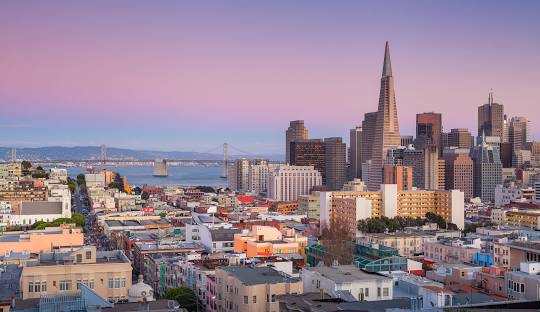
You just got liquid. Maybe Nvidia vested. Maybe your startup had a tender offer. Maybe your financial adviser looked at your brokerage account and said it's time to get into real estate. You're thinking San Francisco. You have $2, $3, maybe $5 to $10 million to work with — and your first question is where to start.
San Francisco is one of the most misunderstood real estate markets in the country. At $2 million, you could be buying a stunning condo overlooking the bay — or a gutted Victorian that needs another $500K just to reach habitable condition. The difference depends entirely on where you look. If you're an outsider, you will not know that difference until it's too late.
The AI liquidity wave is real and ongoing. Vesting events, tender offers, and IPO windows are putting serious capital into the market on a regular basis. The buyers showing up right now are sophisticated, data-oriented, and moving fast — which means the best properties at each price tier aren't sitting.
In this article, we'll break down:
- Why San Francisco requires genuine local knowledge to navigate
- The $2–3M tier: two distinct markets — condos vs. single-family
- The $3–5M tier: when prestige neighborhoods become accessible
- The $5–10M and $10M+ tier: San Francisco's finest homes and what separates them
- What every AI-liquidity buyer needs to know before making an offer
Why San Francisco Real Estate Requires a Different Framework
Before drilling into specific neighborhoods, one framing note matters: the price bands used here reflect current market conditions, but this market is moving fast. What is a $2–3M price point today could shift to $3–4M by next year. AI liquidity events are not slowing down, and they don't wait.
San Francisco is also not one market. It's several cities stacked on top of each other, separated by hills, microclimates, commute corridors, school districts, and lifestyle identities. A buyer who wants to walk to a ramen spot at 10pm on a Tuesday needs a completely different neighborhood than the buyer who wants to run through a redwood grove before breakfast. Both of those buyers could rationally spend the same $3.5 million — and both could be right.
Condos and single-family homes in San Francisco also don't overlap geographically at the same price ranges. They are essentially two separate markets. Understanding that split is the foundational piece of local knowledge that changes everything.
The $2–3M Tier: Two Markets, Two Geographies
In the last two and a half months, 250 homes sold in the $2–3M range across San Francisco. That's an active market. Of those, 88 were condos — and the condo market and the single-family market cluster in completely different parts of the city.
Condos at $2–3M concentrate heavily in SOMA and Mission Bay — San Francisco's purpose-built tech corridor. Salesforce Tower, Oracle Park, Caltrain, direct Uber access to SFO, and a growing concentration of AI company offices all sit here. These buildings are newer, finishes are modern, and amenity packages are strong. The trade-off is a higher HOA for that convenience and lifestyle.
Beyond SOMA, condo activity appears in North Beach, the Marina, Presidio Heights, and Haight-Ashbury. The reason buyers spend $2M+ on a condo in these neighborhoods rather than a less sought-after area for less comes down to three things:
- Commercial access — North Beach puts you steps from Columbus Avenue, Washington Square Park, and some of the city's best independent restaurants and bookstores. The Marina means Chestnut Street: a walkable strip of boutique retail, coffee, and brunch that consistently ranks among the city's best
- Product scarcity — Many condos in these character neighborhoods are converted multi-families with pre-war bones: bay windows, original molding, 11-foot ceilings, often fully modernized inside. That product type cannot be replicated on a new development site
- Entry point to a premium neighborhood — A single-family home in these same northern neighborhoods often costs double. The condo is the only way to buy into that location at this price tier
Single-family homes at $2–3M tell a completely different geographic story. The cluster moves south and west into the outer neighborhoods — and this is where local knowledge earns its value.
- Sunset District (Inner and Outer) — Probably the single most active single-family market in this price tier right now. Often underestimated by outsiders. Yes, it gets more fog. Yes, it's further from downtown. But Irving Street and Noriega Street are full of independent restaurants — Korean, Vietnamese, Japanese, authentic dim sum. Golden Gate Park is a five-minute walk. Ocean Beach is a ten-minute drive. Homes are typically well-maintained Edwardians and stucco row homes, often move-ready with real backyards
- Bernal Heights — Elevated geography means hilltop views that rival anywhere in the city. Tight-knit neighborhood feel. Cortland Avenue punches above its weight: independent coffee, a strong farmers market, a genuinely good restaurant scene. Skews toward young professional families; extremely dog-friendly
- Noe Valley — Exists in its own microclimate bubble. When the rest of the city is fogged in, Noe Valley often has sun. 24th Street is one of SF's best neighborhood strips. Stroller-friendly, family-forward, and consistently in demand
- Castro — Famous nightlife identity, but the homes themselves are stunning: some of the best-preserved Victorian stock in the city, often on tree-lined streets. Geographic sweet spot — close to the center of SF, so getting anywhere is straightforward
- Inner Richmond — The city's most underrated neighborhood. Clement Street is a genuine multi-ethnic food corridor: Burma Superstar, Hong Kong Lounge, authentic dim sum. Adjacent to the northern edge of Golden Gate Park. Classic Edwardian six-room homes with formal dining rooms and garages, still offering strong value at this price point
The $3–5M Tier: Prestige Neighborhoods Open Up
When budgets move into the $3–5M range, the outer neighborhoods don't disappear. The Richmond, Outer Sunset, Noe Valley, and Castro will have larger homes, premium lots, and rare double-wide parcels that push into this range — especially anything with views or significant renovation. But new clusters form to the north, and those shifts represent some of the most consequential buying decisions in San Francisco real estate.
Pacific Heights is San Francisco's Gold Coast. Broadway, Broadway Heights, Octavia, Washington — these streets define prestige in the city. The architecture is among the finest in America: grand Edwardian and Victorian homes with formal parlors, butler's pantries, and in many cases unobstructed bay views toward Marin and Tiburon. Fillmore Street and Sacramento Street retail are at your doorstep.
At $3–5M, you're entering Pacific Heights — but not yet at its peak. You're likely looking at a flat or a mid-block Victorian. The trophy properties belong to the next tier.
Presidio Heights is the quieter, arguably more exclusive sibling to Pacific Heights. Fewer tourists, narrower streets, a slightly older resident profile. Sacramento Street here has a genuine village quality — wine shops, an excellent bookstore, coffee where the owner knows your order. The neighborhood borders 1,500 acres of Presidio National Parkland with trails, forest, and bay overlooks. If you want Pacific Heights prestige without Fillmore Street traffic, this is where you go.
Russian Hill offers something rare in San Francisco: residential streets that feel genuinely quiet while sitting eight minutes from everything. Vallejo Street Steps, Macondray Lane — these are the blocks that explain why people fall in love with this city. Bay views, significant renovation opportunities, and a range of housing from Edwardian row homes to mid-century condos.
Japantown surroundings surprises buyers consistently. The residential blocks around Japan Center are beautiful, quiet, and dense with character architecture — with easy access to Lower Pacific Heights and the Fillmore Jazz District. At this price point, three- and four-bedroom homes on proper lots become available.
The Marina at $3–5M transitions from condos to single-family homes. The Marina is consistently popular with the 35–50 demographic. Marina Green, Crissy Field, the Palace of Fine Arts — this is the postcard version of San Francisco, and demand at this price point reflects it.
The $5–10M and $10M+ Tier: San Francisco's Finest Homes
In recent months, 52 homes sold in the $5–10M range across San Francisco — a number that signals genuine demand at the high end, not just aspirational pricing.
At this tier, the map tightens considerably. The clear center of gravity runs through Pacific Heights, Presidio Heights, Lake Street, and Sea Cliff.
Pacific Heights at $5–10M is a completely different asset than the $3–5M version. Freestanding single-family mansions. Six bedrooms. Formal entertaining rooms. Panoramic bay views. Formal gardens, garages, and restoration work happening on these blocks every week. These are generational homes.
Lake Street runs along the southern edge of the Presidio — extremely quiet, extremely private, with substantial home sizes. Buyers who find their way here tend to stay for decades. Strong public schools nearby, easy Presidio trail access, ten-minute drive to downtown.
Sea Cliff is where San Francisco real estate reaches its logical apex in terms of setting. Homes sit on bluffs above Baker Beach and China Beach — two of the most dramatic natural landscapes inside any major American city. Properties here are large, often mid-century or earlier, frequently on oversized lots. The neighborhood has a hush to it that nowhere else in San Francisco has.
Both old money and new AI money are in Sea Cliff — but loudly visible wealth is not. That's not how wealth is displayed here. What people value is the rarity of being able to own in this location at all.
At $10M and above, the geography doesn't change — it concentrates further. What separates a $10M home from an $8M home in Pacific Heights is typically a combination of:
- Street address — certain blocks carry significant premiums
- Lot size
- Extent and quality of renovation
- View exposure
- Provenance — who built it, who lived there, what was done and when
The $10M+ buyer in San Francisco is also rarely buying on emotion alone. This is a market where no single zip code monopolizes ultra-luxury. That tier is distributed across Sea Cliff, Presidio Heights, Pacific Heights, and occasionally Russian Hill and Noe Valley. It is neighborhood-driven at every price point.
What Buyers Need to Know Before Moving in San Francisco
San Francisco rewards buyers who understand the micro-level texture of each neighborhood — and punishes those who rely on broad market narratives. A few principles that apply across every price tier:
- Microclimate matters more than most buyers expect — fog patterns, elevation, and sun exposure affect livability in ways that only become clear after a year of living here
- Commute mapping is essential before any offer — Caltrain access, highway proximity, and neighborhood walkability vary enormously block by block
- HOA structures on condos carry real cost — newer buildings with full amenity packages in SOMA and Mission Bay come with HOAs that can run $1,000–$2,500/month or more
- Renovation upside is real, but scope must be fully understood — gutted Victorians in desirable neighborhoods can have exceptional upside; the question is always current condition vs. quoted cost vs. actual cost
- The best properties at every tier are moving fast — AI liquidity events are creating a class of buyers who are pre-qualified, data-driven, and ready to act; waiting for the "right moment" in this market has a measurable cost
Conclusion
San Francisco is not one market — it's a collection of microcultures, commute patterns, and lifestyle identities priced along a continuum from $2M to well above $10M. What you buy depends not just on budget but on how you want to live: which neighborhood fits your morning routine, your commute, your school preference, and your long-term appreciation thesis.
The AI liquidity wave now reshaping the city's buyer pool is bringing capital that understands data and moves quickly. In that environment, local expertise — knowing which blocks hold value, which ones have issues that don't show up in any data set, and which opportunities are worth moving on — is the real asset.
As a data-driven Bay Area real estate advisor ranked in the top 0.5% nationally with over $80M in annual production, I help clients analyze not only properties — but the long-term direction of the markets they're buying into.
[youtube: https://www.youtube.com/watch?v=CyNCZSgeOO8]
📩 Subscribe to the newsletter for weekly Bay Area development updates and Silicon Valley real estate insights.
📅 Schedule a consultation to discuss your real estate goals and investment strategy across the Peninsula and Bay Area markets.