Introduction
Palo Alto is undergoing the most significant housing transformation in its modern history — and most homeowners don't know it yet.
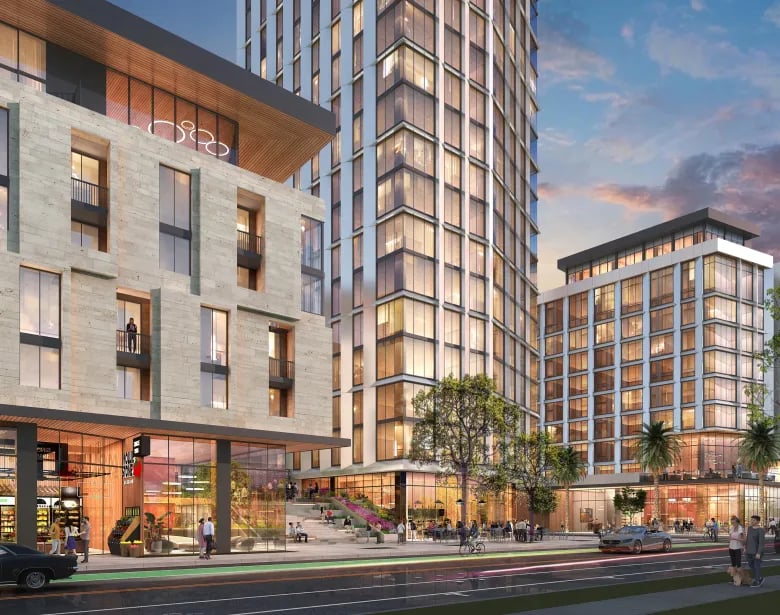
A grocery store is being replaced by a 17-story residential tower. A motel strip along El Camino Real is converting into thousands of apartments. And the state of California has given Palo Alto a hard deadline of July 1, 2026 — less than 45 days away — to certify its Housing Element or face a consequence with no modern precedent: developers receive a blank check to build whatever they want, wherever they want, with no local approval required.
This isn't a future scenario. Multiple projects are already in environmental review. Thousands of units are in the pipeline. Active lawsuits between developers and the city are moving through the courts. The rules governing one of the most expensive real estate markets in the world are being fundamentally rewritten.
If you own a home near El Camino Real, California Avenue, the Baylands, or anywhere within a half mile of a Caltrain station, this shift will affect how your property is valued.
In this article, we'll break down:
- The state housing law creating this deadline — and what happens if Palo Alto misses it
- Every major development project currently in the pipeline
- The transformation underway in the Baylands and eastern corridor
- The San Antonio Road Corridor's 3,800–7,400 unit master plan for South Palo Alto
- What all of this means for home values at every price tier
The State Housing Deadline Giving Developers Unprecedented Power
California's Housing Element law requires every city to plan for its share of regional housing growth. Palo Alto has repeatedly clashed with state housing regulators over compliance — and the consequences of non-compliance have arrived.
The mechanism is known as the Builder's Remedy. When a city's Housing Element falls out of compliance, state law strips local governments of their ability to deny qualifying affordable housing projects on zoning grounds. Developers can propose almost anything, anywhere — and the city has very limited legal recourse to refuse.
With the July 1, 2026 deadline approaching, Palo Alto is running out of time:
- Multiple active lawsuits from developers are already filed against the city
- Projects that would have been blocked under traditional zoning are moving forward
- Thousands of new residential units are in various stages of approval and environmental review
- The city's ability to control its own growth trajectory is narrowing by the month
Major Development Projects Already in the Pipeline
The transformation is concrete, not theoretical. These are the specific projects reshaping Palo Alto's housing landscape right now.
The Baylands — Eastern Corridor
Tech demand from Meta (One Hacker Way) and Google (Mountain View campus) has driven sustained buyer pressure along Palo Alto's eastern corridor for years. Two Baylands projects were approved just 30 days apart — a clear signal that this corridor has become a primary development target:
- 145-unit residential project near the Baylands — recently approved
- 62 units at 2225 East Bay Shore Road — 12 buildings, three stories, 2 to 8 units per structure, each with a private balcony and two-car garage
- Both approvals cleared within a single 30-day window — not a coincidence
The Old Fry's Electronics Site — 3200 Park Boulevard
One of Silicon Valley's most iconic tech retail landmarks is becoming a residential neighborhood. The 3200 Park Boulevard site is currently in environmental review for 74 townhomes plus a community land donation. For anyone who has been in the Bay Area for more than a decade, this signals how decisively the region's commercial real estate is shifting toward residential use.
Creek Side Inn Hotel Conversion
Oxford Capital Group is proposing to redevelop a portion of the Creek Side Inn into 231 residential units across four buildings — three residential towers in total. This will not be the last hotel-to-housing conversion on El Camino Real. The economics of extended-stay hospitality in Palo Alto have been under sustained pressure since 2020, and residential conversion now offers significantly better returns.
South Palo Alto: The San Antonio Road Corridor's Master Plan
If the individual projects above represent the first wave, the San Antonio Road Corridor represents something of a different scale entirely.
South Palo Alto's SAP Corridor is a multi-year development framework projecting 3,800 to 7,400 new residential units. Unlike individual building approvals, this is a coordinated infrastructure-level transformation of an entire corridor — involving multiple developers, city planning frameworks, and construction timelines stretching well into the next decade.
Key facts about the SAP plan:
- 3,800 to 7,400 units projected across the corridor
- Multi-year construction timeline already underway
- Affects South Palo Alto — a market tier with distinct buyer dynamics from the North
- Represents the single largest concentration of new housing density in Palo Alto's modern history
For homeowners in the area, this means sustained construction activity in the near term, some new-supply pricing pressure in the 3–5 year window, and long-term upside as the corridor matures into a denser, more walkable neighborhood served by Caltrain.
What This Means for Buyers and Homeowners at Every Price Tier
The critical question for any Palo Alto homeowner or buyer is not whether development is happening — it clearly is. The question is what it means for your specific property.
Sub-$2M: This segment faces the most direct competition from new supply. Townhome and multi-family projects target this price tier, which means increased inventory over the next 3–5 years. Near-term, buyers gain more options. Long-term, neighborhoods become denser and more transit-connected — which historically supports value stability in high-demand markets.
$2M–$4M: The mid-tier single-family market near California Avenue and the Baylands corridor is well-positioned. Sustained tech demand from Meta and Google continues to underpin this price range. New construction at this tier tends to validate, not suppress, nearby existing home values.
$4M+: North Palo Alto and high-end single-family homes face the least direct supply competition. Luxury product is rarely targeted by Builder's Remedy projects, which prioritize affordable and workforce housing. This segment may benefit from the neighborhood evolution and amenity improvements that accompany large-scale development over time.
Conclusion
Palo Alto is at a genuine inflection point. The combination of state housing law pressure, a hard July 2026 compliance deadline, and one of the most aggressive development pipelines in the city's history means the housing landscape will look fundamentally different in five years than it does today.
For buyers, this creates opportunity — particularly in the eastern Baylands corridor and South Palo Alto, where the largest concentrations of new product are materializing. For sellers, understanding how proximate development affects your specific property is now an essential part of any pricing and listing strategy.
This is precisely the kind of market intelligence that separates informed real estate decisions from reactive ones.
As a data-driven Bay Area real estate advisor ranked in the top 0.5% nationally with over $80M in annual production, I help clients analyze not only properties — but the long-term direction of the markets they're buying into.
Watch the FULL video here
📩 Subscribe to the newsletter for weekly Bay Area development updates and Silicon Valley real estate insights.
📅 Schedule a consultation to discuss your real estate goals and investment strategy across the Peninsula and Bay Area markets.