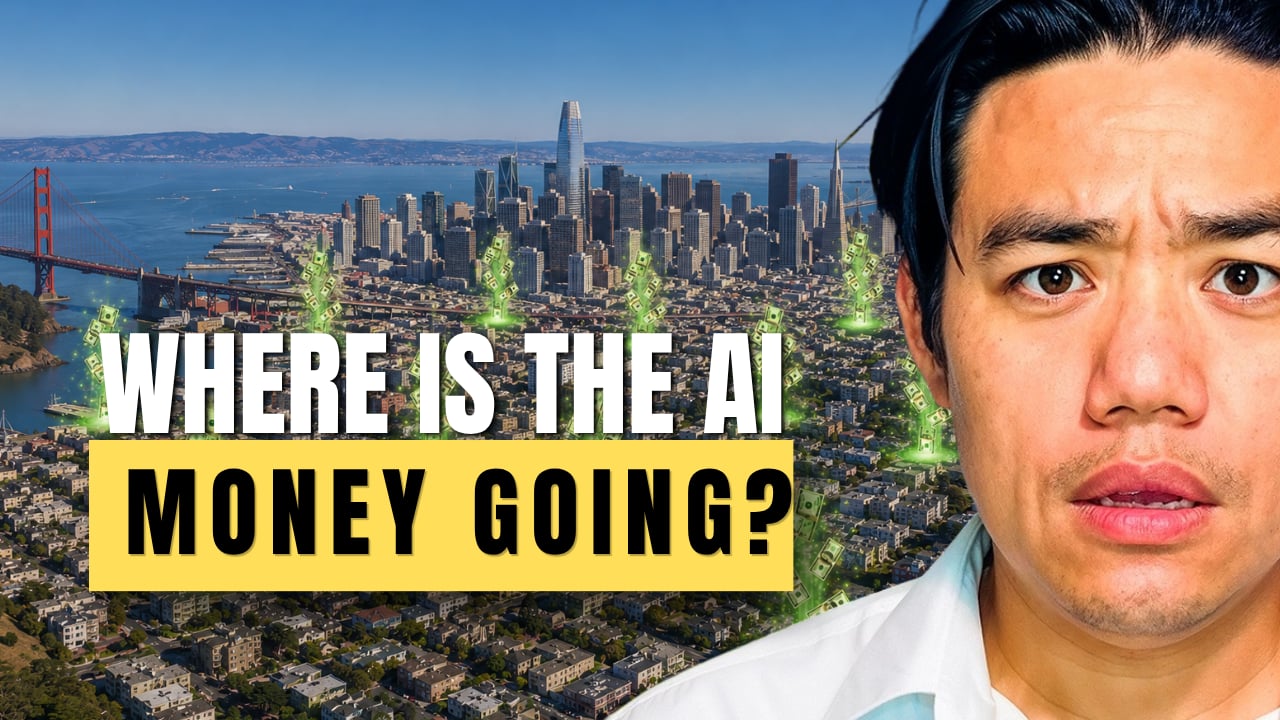
Where Are AI Millionaires Actually Buying Homes in the Bay Area?
For years, many people believed San Francisco's housing market had lost momentum. Between remote work, tech layoffs, and rising interest rates, headlines often painted a picture of a city in decline.
But in 2026, the data tells a completely different story.
A new wave of wealth generated by artificial intelligence companies is driving one of the strongest housing market surges San Francisco has seen in years. Employees and executives from companies like OpenAI, Anthropic, Databricks, xAI, Scale AI, and CoreWeave are pouring money into Bay Area real estate, creating fierce competition across multiple price points.
The biggest question is no longer whether AI is impacting housing—it’s where that money is actually going.
San Francisco's Housing Market Is Experiencing a Major AI-Driven Boom
The numbers are difficult to ignore.
As of April 2026:
- Median home price across all property types in San Francisco reached $1.677 million
- Prices increased approximately 10% year-over-year
- Single-family homes reached a median price of $2.105 million
- Single-family home values climbed roughly 20% compared to April 2025
After several years of relatively flat performance following the 2022 interest rate hikes, San Francisco has suddenly reaccelerated.
What changed?
The answer appears to be liquidity from the AI sector.
Unlike previous technology cycles, many AI employees don't need to wait for an IPO to access wealth. Secondary market transactions, tender offers, and company buybacks have allowed employees to convert stock holdings into cash much earlier.
That capital is now flowing directly into real estate.
The AI Housing Boom Is Concentrated in Higher Price Points
One of the most fascinating findings is that not every segment of the market is benefiting equally.
The strongest demand is occurring in homes priced above $2 million.
Under $1 Million: Relatively Stable
Properties selling below $1 million have remained fairly consistent.
Sales-to-list-price ratios have hovered around:
- 101%–102%
Competition exists, but the market isn't dramatically different from previous years.
$1 Million to $2 Million: Demand Begins to Accelerate
Homes in this range are becoming increasingly competitive.
Recent sales-to-list-price ratios reached:
- Approximately 117%
This represents a noticeable increase compared to previous years.
$2 Million to $3 Million: The Sweet Spot for AI Buyers
This is where the market starts to heat up significantly.
Sales-to-list-price ratios jumped to:
- Approximately 125%
Compared to historical norms near 110%–112%, buyers are aggressively competing for inventory.
Many AI professionals purchasing their first luxury home fall directly into this category.
The $3 Million to $5 Million Market Is Surging
The luxury market is no longer limited to traditional executives or long-time Bay Area homeowners.
Properties between $3 million and $5 million are seeing unprecedented demand.
Current sales-to-list-price ratios have reached:
- Approximately 123%
Historically, this segment typically traded around:
- 106%–108%
The increase suggests significant new wealth entering the market.
Many buyers in this range are technology employees who have recently gained access to substantial liquidity through stock sales.
Even the Ultra-Luxury Market Is Booming
Perhaps the most surprising trend is occurring in homes priced between $5 million and $10 million.
Historically, this segment moved relatively slowly.
Previous years often saw:
- 98%–101% sales-to-list-price ratios
Today?
- Approximately 118%
That means luxury buyers are frequently paying well above asking price for premium properties.
This level of competition was virtually unheard of in recent years.
Where Buyers With $2 Million to $3 Million Budgets Are Shopping
Buyers entering San Francisco's market with budgets between $2 million and $3 million have several strong options.
Popular neighborhoods include:
Bernal Heights
A favorite for buyers seeking charm, walkability, and easier access to downtown.
Inner Sunset
Known for its family-friendly atmosphere, proximity to parks, and excellent neighborhood feel.
Outer Sunset
Offers larger homes, ocean proximity, and comparatively strong value.
Portola
An emerging neighborhood attracting buyers seeking affordability relative to other parts of the city.
These areas provide a mix of single-family homes, condos, and townhomes while remaining below the ultra-luxury threshold.
Where Buyers With $3 Million to $5 Million Budgets Are Purchasing
As budgets increase, buyers gain access to some of San Francisco's most desirable neighborhoods.
Popular choices include:
Noe Valley
Known for excellent schools, walkability, and strong family appeal.
Castro District
Offers vibrant city living with iconic San Francisco character.
West Portal
A highly desirable neighborhood combining suburban comfort with urban convenience.
Japantown
Features luxury housing options close to dining, culture, and employment centers.
At this level, buyers often compete for fully remodeled homes, larger floor plans, and premium locations.
The Neighborhoods Dominating the $5 Million to $10 Million Market
When budgets reach the ultra-luxury category, demand becomes concentrated in San Francisco's most prestigious neighborhoods.
Pacific Heights
Long considered one of the city's premier luxury destinations.
Presidio Heights
Offers expansive homes, prestigious addresses, and proximity to parks.
Marina District
Continues attracting affluent buyers seeking views, lifestyle, and location.
Lake Street
One of the city's most exclusive residential corridors.
These neighborhoods have historically been expensive, but the influx of AI wealth is pushing prices and competition even higher.
Luxury Condos Are Making a Comeback
One unexpected development is the resurgence of high-end condominiums.
Many buyers assume luxury condos struggle in San Francisco's market.
The data suggests otherwise.
Properties priced between $3 million and $5 million include:
- Penthouse residences
- Luxury conversions
- View properties
- Large-format condominiums
These homes are selling successfully and often attracting multiple offers.
Neighborhoods such as:
- Mission Bay
- South of Market
- Financial District
continue to see strong demand from affluent technology professionals who prioritize convenience and urban living.
Why AI Wealth Is Different From Previous Tech Booms
Previous technology cycles often required employees to wait years for liquidity events.
Today's AI economy works differently.
Many employees at leading AI firms already have access to:
- Secondary stock sales
- Tender offers
- Company buyback programs
- Private market liquidity
As a result, wealth is reaching the housing market much faster than many analysts anticipated.
What makes this particularly noteworthy is that the current boom only started showing up meaningfully in housing data during 2026.
Many industry observers believe the trend is still in its early stages.
What This Means for Buyers and Sellers
For Buyers
If you work in AI or technology and are considering purchasing in San Francisco, competition is intensifying rapidly.
Waiting could mean:
- Higher home prices
- More bidding wars
- Reduced inventory in premium neighborhoods
For Sellers
Homeowners with properties in the $2 million-plus range may be entering one of the strongest seller environments seen in years.
Luxury sellers, in particular, are benefiting from unprecedented demand from newly wealthy technology professionals.
Final Thoughts
The AI revolution isn't just transforming technology—it is reshaping San Francisco real estate.
The strongest demand is clearly concentrated in homes priced above $2 million, with luxury and ultra-luxury neighborhoods seeing some of the most dramatic appreciation and competition.
Whether you're an AI employee looking to deploy newly created wealth or a homeowner wondering if now is the right time to sell, understanding where demand is concentrated can help you make smarter real estate decisions.
One thing is becoming increasingly clear: the AI housing boom in San Francisco is no longer a prediction—it's already happening.